
Essential Istanbul: A Guide to the City’s Historic Highlights
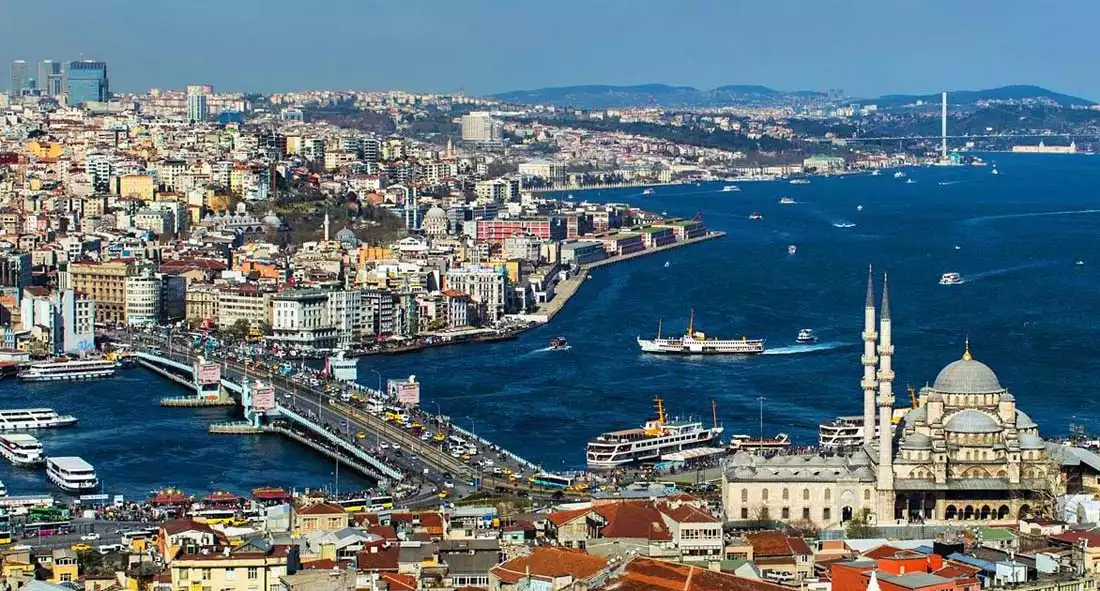
Few cities reveal their history as visibly as Istanbul.
Roman monuments, Byzantine churches and cisterns, Ottoman mosques and palaces, centuries-old markets and the waters of the Bosphorus all form part of the modern city.
For a first-time visitor, the challenge is not finding things to see. It is deciding where to begin.
This Essential Istanbul guide introduces the historic landmarks that provide the clearest overview of the city’s past and explains how they fit together geographically and historically.
Most of the essential sights for a first visit are concentrated in and around Istanbul’s Historic Peninsula, making it possible to experience several different periods of the city within a relatively compact area.
Why Istanbul’s Historic Peninsula Matters
Modern Istanbul extends across a vast metropolitan area, but the Historic Peninsula is where ancient Byzantium and Constantinople developed and where the Ottoman capital later grew.
Surrounded by the Golden Horn, Bosphorus and Sea of Marmara, the peninsula contains some of the city’s most important monuments.
Istanbul’s Historic Areas have been included on the UNESCO World Heritage List since 1985. The protected components include Sultanahmet, Süleymaniye, Zeyrek and the historic land walls. UNESCO identifies monuments such as Hagia Sophia, the Hippodrome, Topkapı Palace, the Blue Mosque and Süleymaniye Mosque as important expressions of the city’s Byzantine and Ottoman heritage.
For a first visit, Sultanahmet is the logical place to start.
1. Sultanahmet Square and the Byzantine Hippodrome
Long before Sultanahmet became one of Istanbul’s principal sightseeing districts, this area formed the ceremonial center of Byzantine Constantinople.
The Hippodrome of Constantinople occupied much of today’s Sultanahmet Square.
It was much more than a racing stadium.
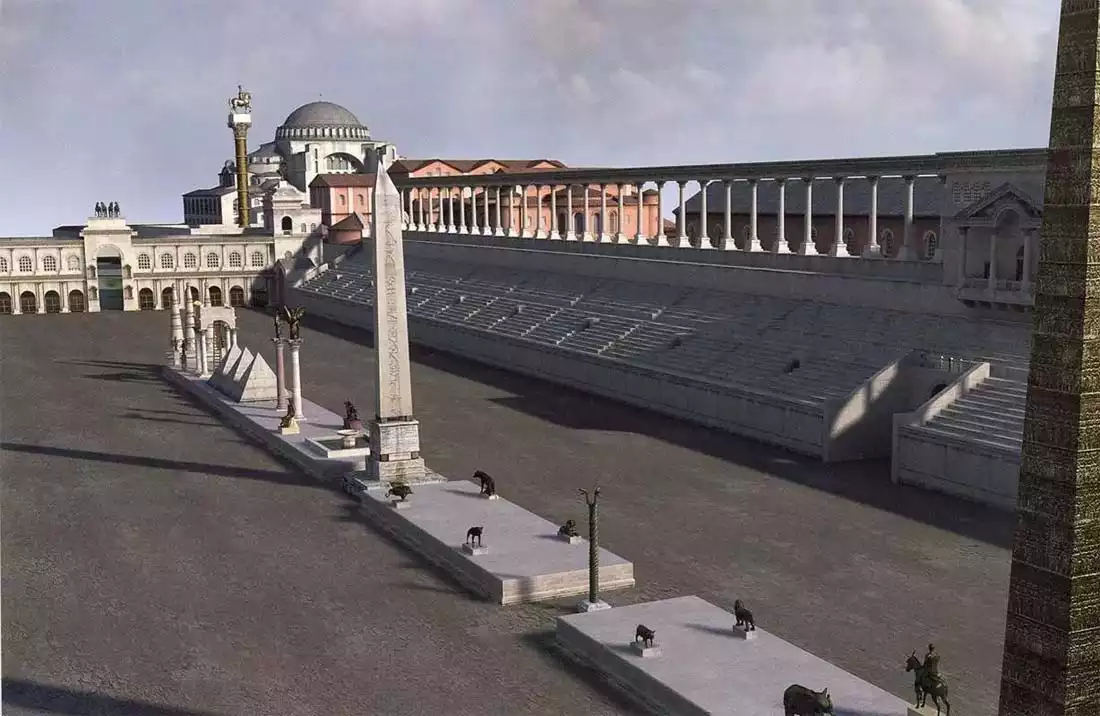
Chariot races were certainly its most famous spectacles, but the Hippodrome was also closely connected with imperial ceremonies, public celebrations and political unrest.
Today, most of the original structure has disappeared beneath the modern city.
Yet several remarkable monuments survive in the former central axis of the Hippodrome.
Obelisk of Theodosius
The Egyptian obelisk standing in Sultanahmet Square is far older than Constantinople itself.
Originally created in ancient Egypt, it was eventually brought to Constantinople and erected in the Hippodrome during the reign of Theodosius I.
Its carved pedestal provides valuable evidence of imperial ceremony and life around the Hippodrome.
Serpent Column
The Serpent Column has an equally remarkable history.
It originated in ancient Greece and was associated with the Greek victory over the Persians at Plataea in 479 BC before eventually being brought to Constantinople.
Only part of the monument survives today.
Walled Obelisk
At the southern end of the former Hippodrome stands another monument generally known as the Walled or Constantine Obelisk.
Together, these monuments make Sultanahmet Square one of the most unusual public spaces in Istanbul: ancient objects from several civilizations remain visible in the middle of a living modern city.
2. Hagia Sophia
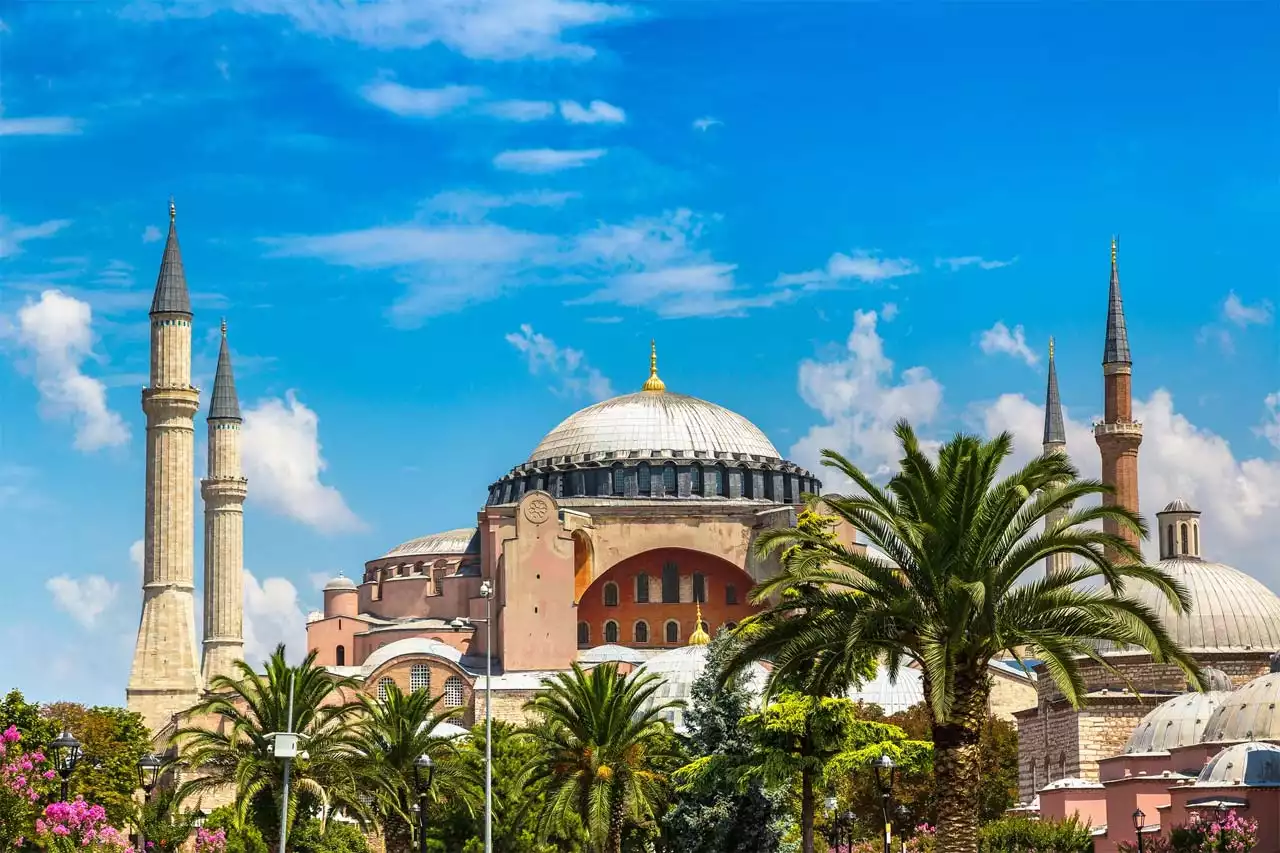
Few buildings represent Istanbul’s layered history as clearly as Hagia Sophia.
The present structure was built between 532 and 537 during the reign of Byzantine Emperor Justinian I and was designed by Anthemius of Tralles and Isidore of Miletus. UNESCO recognizes it as one of the architectural masterpieces of Istanbul’s historic areas.
For centuries it served as the principal imperial church of Constantinople.
Following the Ottoman conquest in 1453, Hagia Sophia was converted into a mosque.
Minarets and other Ottoman architectural elements were added over the centuries, while the building continued to develop as an important religious monument.
It became a museum during the Republican era and returned to use as a mosque in 2020.
What Makes Hagia Sophia Important?
The significance of Hagia Sophia lies partly in the way several historical periods remain visible within the same structure.
Visitors can encounter:
- The enormous central dome
- Byzantine mosaics
- Marble architectural elements
- Ottoman calligraphy
- Minarets and later additions
- Islamic and Christian artistic heritage
It is therefore much more than either a Byzantine church or an Ottoman mosque.
It is a physical record of Istanbul’s transformation through different empires and religious traditions.
Visiting Hagia Sophia Today
Hagia Sophia is an active mosque.
A separate visitor arrangement for cultural tourists was introduced in 2024, allowing visitors to follow a gallery-level route while protecting the prayer environment below.
Access arrangements, fees and restoration conditions can change, so check the current official information shortly before visiting rather than relying on older Istanbul guidebooks.
3. Blue Mosque
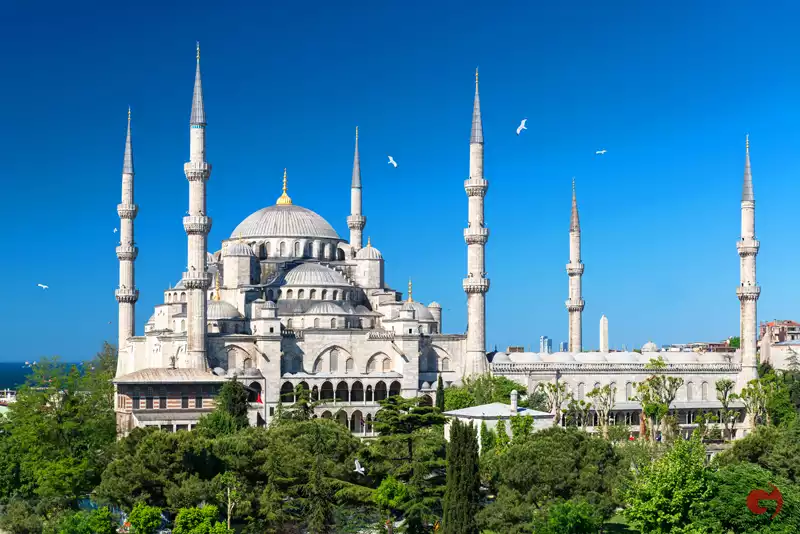
Directly across Sultanahmet Square from Hagia Sophia stands another of Istanbul’s defining landmarks: Sultan Ahmed Mosque, commonly known as the Blue Mosque.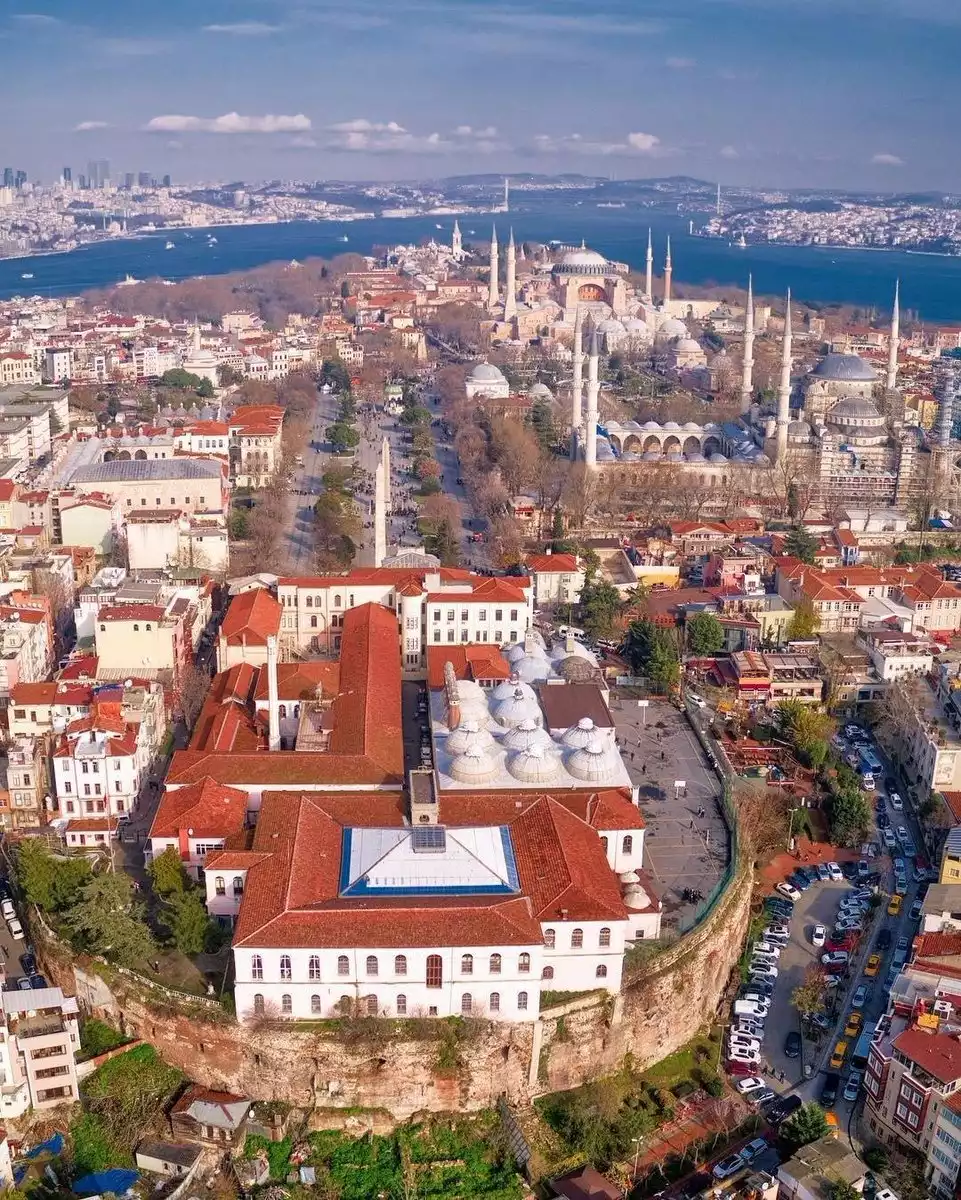
Commissioned by Sultan Ahmed I and constructed in the early 17th century, the mosque is one of the great monuments of classical Ottoman architecture.
Its nickname comes from the extensive use of decorative tiles inside.
Current Turkish cultural records identify more than 21,000 tiles used throughout the mosque, while its exterior is immediately recognizable by its cascading domes and six minarets.
Why Visit the Blue Mosque?
Hagia Sophia and the Blue Mosque stand almost face to face, but they tell different chapters of Istanbul history.
Hagia Sophia demonstrates the architectural ambition of 6th-century Byzantium.
The Blue Mosque demonstrates how Ottoman imperial mosque architecture had developed more than a thousand years later.
Seeing them together makes Sultanahmet one of the best places to understand the continuity and transformation of Istanbul.
Visiting an Active Mosque
The Blue Mosque remains an active place of worship.
Visitors should:
- Dress respectfully
- Follow the instructions at the entrance
- Respect prayer areas
- Avoid disturbing worshippers
- Follow current photography rules
- Expect tourist access to be restricted during prayers
Rather than relying on old opening-hour information, check current arrangements on the day of your visit.
4. Topkapi Palace
A short walk from Hagia Sophia leads toward Topkapi Palace, the administrative and residential heart of the Ottoman Empire for centuries.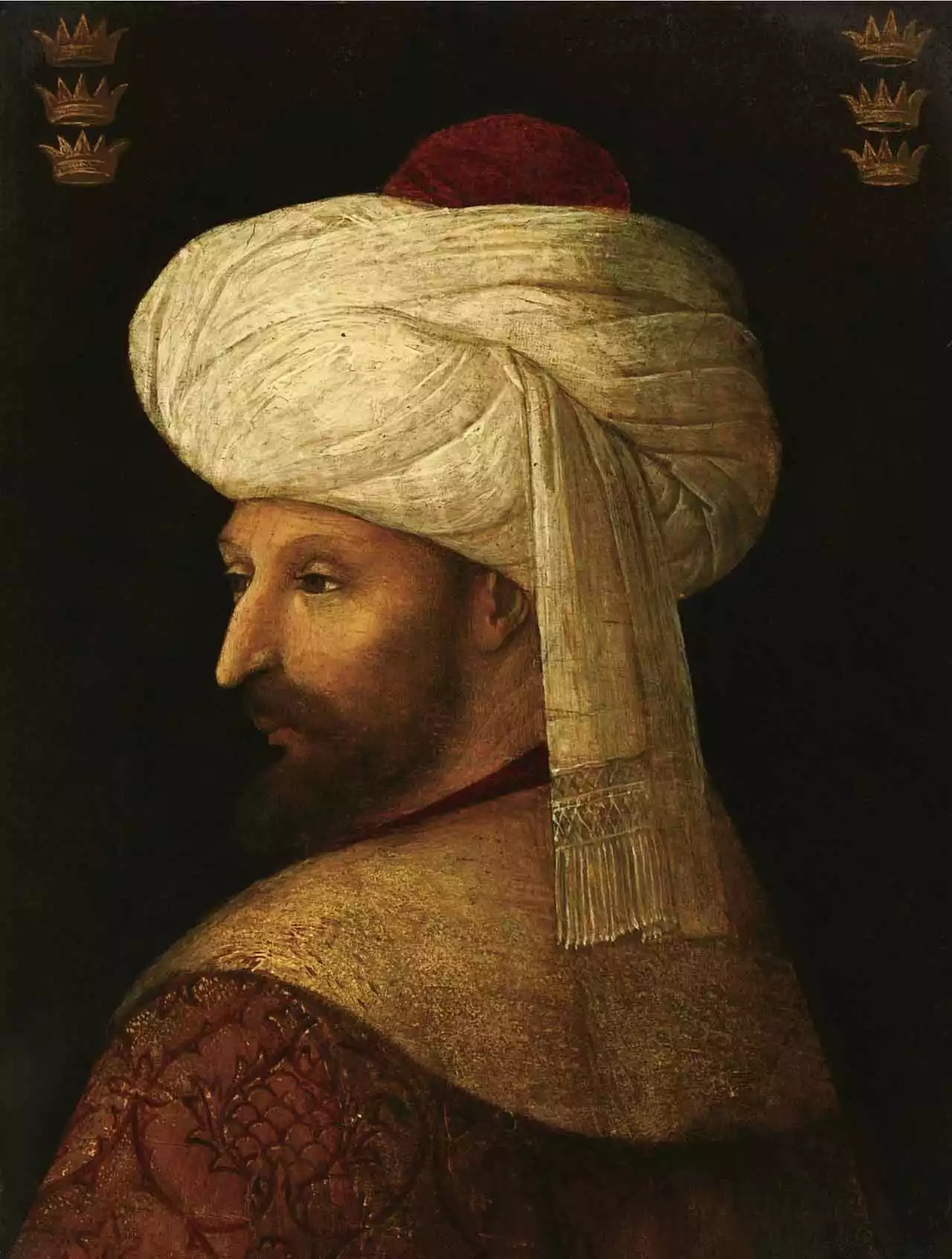
Sultan Mehmed II began construction after the conquest of Constantinople, and the principal palace complex developed between 1460 and 1478 before being expanded by later sultans.
Unlike many European palaces built around one enormous symmetrical structure, Topkapi developed as a complex of:
- Courtyards
- Gardens
- Pavilions
- Administrative chambers
- Kitchens
- Treasury rooms
- Residential quarters
- Religious spaces
- Imperial apartments
This layout reflects the organization of the Ottoman court.
The Four Main Courtyards
Understanding Topkapi becomes easier when you think of it as a sequence of increasingly private spaces.
First Courtyard
The outermost area served various public, service and ceremonial functions.
Aya Irini, or Hagia Irene, is also located in this part of the palace complex.
Second Courtyard
The second courtyard was closely connected with the administration of the empire.
The Imperial Council met here, while palace kitchens and other service areas were also located around the courtyard.
Third Courtyard
Passing through the Gate of Felicity brought visitors into a more restricted imperial environment.
This area contained the Audience Chamber, palace school and spaces associated with the sultan’s household.
Fourth Courtyard
The final areas include imperial pavilions, terraces and gardens overlooking the Bosphorus and Golden Horn.
These viewpoints alone help explain why this particular peninsula was chosen for the palace.
The Topkapi Palace Harem
The Harem is one of the most frequently misunderstood parts of the palace.
Rather than treating it through sensational stories about the sultans’ private lives, it is more useful to understand it as a highly organized residential and dynastic environment.
It contained the living quarters of members of the imperial household and developed into a complex architectural world of:
- Apartments
- Courtyards
- Corridors
- Ceremonial rooms
- Baths
- Private chambers
For visitors interested in Ottoman palace architecture, the Harem is one of the most valuable parts of Topkapi.
How Long Should You Allow for Topkapi Palace?
Topkapi is much larger than it first appears.
A quick visit may cover only the principal courtyards.
Visitors interested in the Harem, collections and architecture should allow considerably more time.
Because exhibits and visitor routes can change, consult the current National Palaces visitor information before planning your visit. Topkapi is now administered by Türkiye’s National Palaces authority.
5. Basilica Cistern
Beneath the streets close to Hagia Sophia lies one of Istanbul’s most atmospheric Byzantine structures: the Basilica Cistern, known in Turkish as Yerebatan Sarnıcı.
The cistern formed part of Constantinople’s sophisticated water-storage infrastructure.
Its enormous underground chamber is supported by rows of stone columns, creating the impression of a submerged palace.
The structure is approximately 1,500 years old and has undergone major modern conservation and restoration work by Istanbul Metropolitan Municipality.
The Medusa Heads
Among the cistern’s most recognizable features are two ancient Medusa-head blocks used as column bases.
One is positioned sideways and the other inverted.
Their exact original purpose and the reason for their unusual placement continue to attract speculation.
Rather than viewing the cistern only as a photogenic underground attraction, remember that it illustrates the engineering required to supply the Byzantine imperial city with water.
6. Grand Bazaar
From Sultanahmet, continue toward Beyazıt and you reach one of Istanbul’s great commercial landmarks: the Grand Bazaar, or Kapalıçarşı.
Its origins date to the period following the Ottoman conquest in the 15th century.
Over time, the original commercial structures developed into an enormous network of covered streets, shops and historic trading areas.
GoTürkiye describes the modern bazaar as containing around 61 covered streets and approximately 4,000 shops, although the exact number of operating businesses naturally changes over time.
What Can You Find in the Grand Bazaar?
Traditional and contemporary businesses sell products including:
- Jewellery
- Carpets and kilims
- Ceramics
- Textiles
- Leather goods
- Lamps
- Copperware
- Antiques
- Souvenirs
The bazaar is not simply a shopping center.
Its streets, bedestens and commercial organization provide a surviving connection with centuries of Ottoman trade.
Do You Have to Buy Something?
No.
Even visitors with no intention of shopping can enjoy exploring the architecture and atmosphere.
If you do want to buy, compare products and prices rather than feeling obliged to purchase from the first shop you enter.
Bargaining remains common for many goods, although not every business or product follows exactly the same practice.
7. Süleymaniye Mosque
From the Grand Bazaar area, continue toward Istanbul’s Third Hill to reach Süleymaniye Mosque.
Built for Sultan Süleyman the Magnificent by the great Ottoman architect Mimar Sinan, the mosque complex was constructed between 1550 and 1557 and is recognized by UNESCO as one of the masterpieces of Ottoman architecture.
The location is as important as the building itself.
Süleymaniye rises above the Golden Horn and forms a major part of Istanbul’s historic skyline.
More Than a Mosque
Like many Ottoman imperial foundations, Süleymaniye was conceived as a large social and religious complex rather than a stand-alone prayer hall.
Its associated buildings historically served functions connected with:
- Education
- Healthcare
- Food distribution
- Accommodation
- Religious life
This broader complex helps visitors understand how major Ottoman mosques functioned as centers of urban life.
Mimar Sinan
Süleymaniye is also essential for understanding Mimar Sinan, the most celebrated architect of the classical Ottoman period.
His works shaped the skylines of Istanbul and numerous other Ottoman cities.
Sinan himself is buried close to the mosque complex.
8. Istanbul Archaeological Museums
Travelers interested in going deeper into the city’s past should also consider the Istanbul Archaeological Museums, located close to Topkapi Palace.
The collections extend far beyond Istanbul itself and contain archaeological material from civilizations that once occupied territories across the Ottoman world.
The museum complex is particularly valuable because it places Istanbul within the wider histories of:
- Anatolia
- Mesopotamia
- The ancient Near East
- Greece
- Rome
- Byzantium
For visitors with a strong interest in archaeology, this deserves considerably more than a quick stop.
9. Hagia Irene
Inside the outer grounds of Topkapi Palace is Hagia Irene, one of Istanbul’s important surviving Byzantine churches.
Unlike Hagia Sophia, it was not converted into a mosque after the Ottoman conquest.
It was instead used for functions including the storage of weapons and later became connected with the development of Ottoman museum collections.
The building’s austere interior and large surviving apse cross create a striking contrast with the more elaborate decoration associated with Hagia Sophia.
10. Explore Beyond Sultanahmet
Sultanahmet contains an extraordinary concentration of monuments, but Istanbul should not be reduced to one historic district.
Once you have seen the principal Old City landmarks, allow time for other parts of the city.
Eminönü
A busy waterfront district connecting the Historic Peninsula with the Golden Horn and Bosphorus.
The nearby Spice Bazaar provides another traditional market experience.
Karaköy and Galata
Cross Galata Bridge for historic streets, cafés, galleries and the famous Galata Tower area.
The Bosphorus
Seeing Istanbul from the water provides a completely different understanding of its geography.
From the Bosphorus you can view Ottoman palaces, waterfront mosques, fortresses, historic mansions and the European and Asian shores together.
Asian Istanbul
Crossing to Üsküdar or Kadıköy reveals a more residential side of the city and makes Istanbul’s two-continent geography easier to appreciate.
Why the Bosphorus Belongs in an Essential Istanbul Visit
Historic Istanbul developed because of its extraordinary geographic position.
The Bosphorus connects the Black Sea with the Sea of Marmara while separating Europe and Asia.
For that reason, experiencing Istanbul only from land leaves part of the city’s story unexplored.
A Bosphorus journey provides views of landmarks such as:
- Dolmabahce Palace
- Ciragan Palace
- Ortakoy Mosque
- Bosphorus bridges
- Rumeli Fortress
- Beylerbeyi Palace
- Maiden’s Tower
- Historic waterfront mansions
Travelers can compare different Bosphorus cruise options according to available time, route and preferred time of day.
How Much Time Do You Need for Essential Istanbul?
Trying to see everything in a single day usually means seeing very little properly.
One Day
Concentrate mainly on Sultanahmet:
- Hippodrome
- Hagia Sophia
- Blue Mosque
- One major additional attraction such as Topkapi Palace or Basilica Cistern
Two Days
Add:
- Topkapi Palace
- Basilica Cistern
- Grand Bazaar
- Süleymaniye Mosque
Three Days
Add:
- Bosphorus
- Galata and Karaköy
- Spice Bazaar
- Asian Side
With four or more days, you can begin exploring neighborhoods and monuments beyond the standard first-time route.
Guided Tour or Independent Visit?
Both can work well.
Explore Independently If:
- You enjoy reading about history beforehand
- You want complete control over your pace
- You plan to spend a long time inside individual monuments
- You are comfortable organizing tickets and visitor schedules yourself
Consider a Guided Experience If:
- This is your first visit to Istanbul
- You want to understand how Byzantine and Ottoman history connect
- Your sightseeing time is limited
- You want historical context rather than simply photographs
- You prefer a structured route
Our Istanbul Tours collection includes different ways to explore the city’s historic areas, while the Istanbul City Tour and combined historical sightseeing experiences are designed for travelers who prefer a structured introduction.
What Is the Best Time of Year to Visit Historic Istanbul?
There is no single season that is best for every traveler.
Spring
Generally pleasant for walking, with longer days and greener landscapes.
Summer
Offers long daylight hours but can be hot and busy.
Autumn
Often provides comfortable sightseeing weather and gradually shorter days.
Winter
Can be cold, rainy and windy but often offers a very different atmosphere and fewer visitors in some areas.
Whichever season you choose, Istanbul’s major historic monuments can be visited throughout the year.
Practical Tips for Historic Istanbul
Wear Comfortable Shoes
Much of the Historic Peninsula is best explored on foot.
Expect cobbled streets, courtyards and long periods of standing.
Dress for Mosque Visits
Hagia Sophia, Blue Mosque and Süleymaniye are active religious sites.
Carry clothing suitable for mosque entry and always follow instructions at the entrance.
Do Not Rely on Old Opening Hours
Religious services, restoration projects, museum schedules and visitor-management systems change.
Check official information shortly before your visit.
Start Early
Major attractions become busier as the day progresses.
Beginning in Sultanahmet early also leaves more flexibility later in the day.
Do Not Overload Your Itinerary
Topkapi Palace, Hagia Sophia and the Grand Bazaar can each take much longer than expected.
Two thoughtfully visited monuments are more rewarding than six rushed ones.
Essential Istanbul Is More Than a Checklist
Hagia Sophia, the Blue Mosque, Topkapi Palace and the Grand Bazaar deserve their fame.
But Istanbul becomes much more interesting once you understand the relationships between them.
The Hippodrome tells the story of imperial Constantinople.
Hagia Sophia demonstrates Byzantine architectural ambition and later Ottoman transformation.
The Blue Mosque and Süleymaniye reveal different periods of Ottoman imperial architecture.
Topkapi explains how the empire was governed.
The Basilica Cistern reveals the infrastructure beneath the Byzantine city.
The Grand Bazaar demonstrates how commerce shaped the Ottoman capital.
And the Bosphorus explains why this city developed here in the first place.
Together, these places provide the foundation for understanding Istanbul—not as a collection of isolated attractions, but as a city shaped continuously by geography, empire, religion, trade and everyday life.
If this is your first visit, begin with the Historic Peninsula, then move outward.
Istanbul becomes more understandable with every layer you add.