
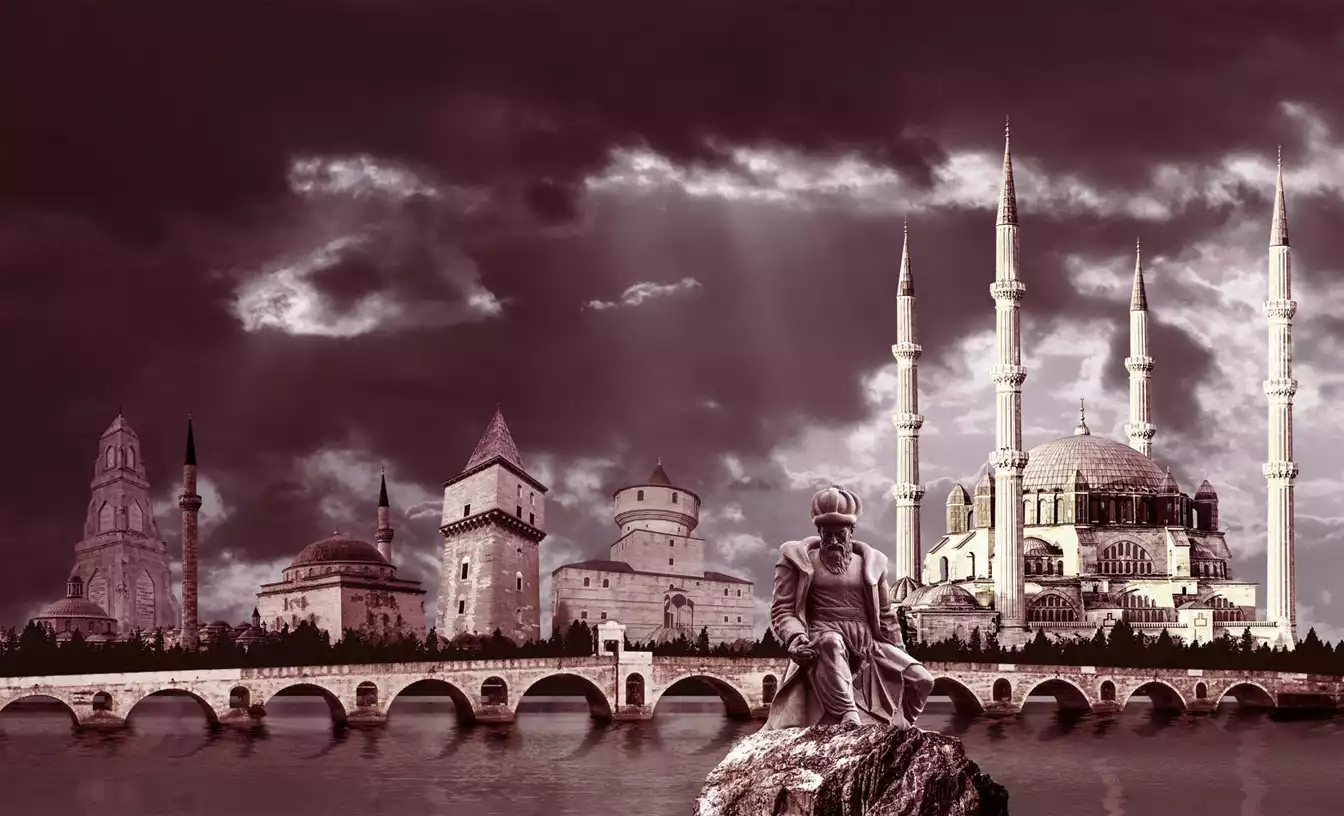
Edirne is one of Türkiye’s most historically important cities and one of the most rewarding destinations for travelers interested in Ottoman architecture and cultural heritage.
Located in European Türkiye, near the borders with Greece and Bulgaria, Edirne served as an Ottoman capital before Constantinople was conquered in 1453.
Today, the city retains an impressive collection of imperial mosques, covered bazaars, historic bridges and monuments that reflect its former importance.
This Edirne travel guide introduces the city’s principal historic attractions and explains why Edirne deserves a place on a cultural journey through Türkiye.
Edirne: A Former Ottoman Capital
Known as Adrianople during the Roman and Byzantine periods, Edirne occupied a strategic position on the routes connecting Constantinople with southeastern Europe.
The city became an important Ottoman political and administrative center during the 14th century.
Before the conquest of Constantinople, Edirne was associated with the expanding Ottoman court, military campaigns and major architectural developments.
The city’s mosques and religious complexes reflect the evolution of Ottoman architecture from its early forms toward the monumental classical style.
Selimiye Mosque: Mimar Sinan’s Masterpiece
The Selimiye Mosque is Edirne’s most celebrated monument.
Commissioned by Sultan Selim II and designed by Mimar Sinan, the mosque was completed in the 16th century and is widely regarded as one of the greatest achievements of classical Ottoman architecture.
Its enormous central dome and four slender minarets dominate the city’s skyline.
Inside, the harmony of the dome, supporting piers, galleries and decorative details creates a remarkable sense of space.
The Selimiye Mosque and its Social Complex became a UNESCO World Heritage Site in 2011.
The surrounding complex also includes historic educational buildings and commercial structures that once supported religious and social life.
Following an extensive restoration, the mosque reopened for worship in 2026.
Eski Cami: Edirne’s Old Mosque
The Eski Cami, or Old Mosque, is one of the city’s earliest surviving major Ottoman monuments.
Construction began in 1403 and was completed in 1414.
Its interior is distinguished by nine domes supported by substantial pillars and walls.
Large examples of Islamic calligraphy create a particularly memorable atmosphere.
Compared with the grand scale of Selimiye, Eski Cami offers a valuable introduction to an earlier phase of Ottoman mosque design.
Üç Şerefeli Mosque
Completed during the reign of Sultan Murad II, the Üç Şerefeli Mosque represents an important stage in the development of Ottoman architecture.
Its name refers to the three balconies of its most prominent minaret.
The mosque combines a large central dome with innovative planning features that helped shape later imperial mosque architecture.
Visitors interested in architecture will find it especially rewarding to compare Üç Şerefeli Mosque with both Eski Cami and Selimiye.
Together, the three buildings illustrate how Ottoman religious architecture developed over successive centuries.
Rüstem Pasha Caravanserai
Edirne was not only a political capital but also an important commercial center.
The Rüstem Pasha Caravanserai, associated with Mimar Sinan, reflects the city’s historical role in trade and travel.
Caravanserais provided accommodation, storage and commercial facilities for merchants traveling between different regions.
The building’s courtyards and architectural organization offer an insight into Ottoman commercial life beyond palaces and mosques.
Sultan Bayezid II Complex and Health Museum
One of Edirne’s most fascinating historical sites is the Sultan Bayezid II Complex, built in the late 15th century.
Its former hospital and medical school are particularly noteworthy.
Today, the Sultan Bayezid II Health Museum explores the history of medicine and healthcare in the Ottoman world.
The historical hospital is especially associated with approaches to treatment involving music, natural surroundings and sensory experience.
This complex demonstrates how architecture, medical education and charitable institutions were connected in Ottoman society.
Edirne’s Historic Bazaars
Commercial life remains an important part of Edirne’s identity.
Historic markets and covered shopping streets provide opportunities to explore traditional shops, local products and Ottoman commercial architecture.
The Selimiye Arasta, near the mosque, is particularly convenient for visitors exploring the historical center.
The markets offer a more relaxed atmosphere than Istanbul’s larger bazaars while preserving elements of the city’s commercial heritage.
Kırkpınar Oil Wrestling Festival
Edirne is internationally associated with the traditional Kırkpınar Oil Wrestling Festival.
The competition is a longstanding part of Turkish sporting and cultural heritage.
Wrestlers, known as pehlivans, compete wearing traditional leather trousers after applying oil to their bodies.
Kırkpınar was included on UNESCO’s Representative List of the Intangible Cultural Heritage of Humanity in 2010.
Festival dates should be checked each year, as they are not fixed permanently to the same week.
What to Eat in Edirne
Edirne also has distinctive culinary traditions.
One of its best-known specialties is Edirne tava ciğeri, thinly sliced and fried liver, traditionally served with peppers and accompaniments.
Other local products include almond-based sweets and decorative fruit-shaped soaps, reflecting the city’s culinary and craft traditions.
A traditional lunch can be an enjoyable break between historical sightseeing stops.
How Much Time Do You Need in Edirne?
A full day allows visitors to see several principal monuments, particularly those concentrated around the historic center.
For a deeper exploration of the museums, religious complexes and surrounding neighborhoods, an overnight stay offers more flexibility.
Travelers visiting independently should check current museum opening hours, mosque visiting arrangements and transportation requirements.
Visiting Edirne From Istanbul
Edirne is accessible from Istanbul by road and is a suitable destination for a full-day cultural excursion.
Travelers with limited time may prefer a guided visit that combines transportation with historical sightseeing.
For an organized experience, explore our Day Trip to Edirne from Istanbul, which introduces the city’s Ottoman heritage and major historic attractions.
Edirne offers a different perspective on Ottoman history from Istanbul.
Where Istanbul reflects the grandeur of the empire after the conquest of Constantinople, Edirne preserves important monuments from its earlier development.
Together, the two cities help tell the larger story of the Ottoman Empire.